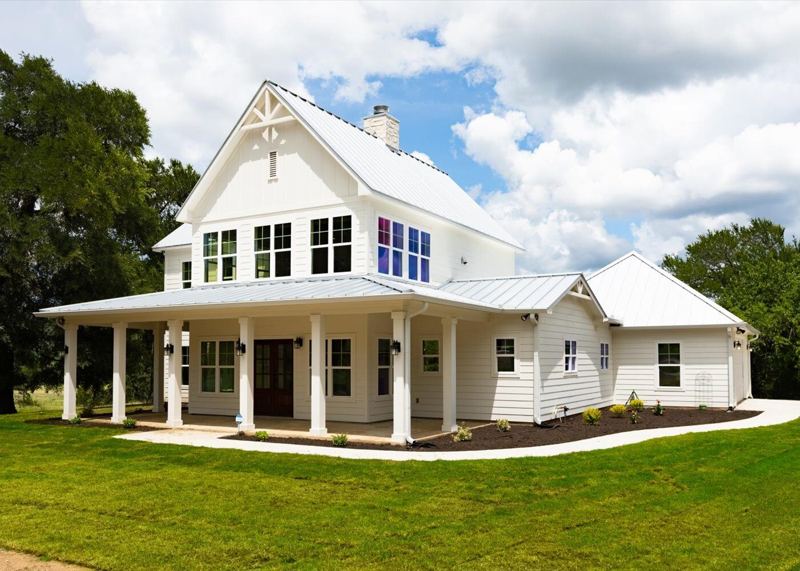
A lot of people looking at land around Sherman, Van Alstyne, Bonham, or Greenville have the same plan: buy a few acres, then find a builder. That order works, but the land decides more about the final cost of a custom home than most buyers expect. Two lots with the same price and the same acreage can lead to very different construction budgets.
Here are the questions worth answering before you close, roughly in the order they tend to surprise people.
1. Is the lot inside city limits or in the county?
Inside a city, the city handles building permits and inspections, and most lots can connect to city water and sewer. In unincorporated parts of the county, the rules are different. Some areas just outside a city also fall under that city’s extraterritorial jurisdiction (ETJ) for things like subdivision rules. Find out which applies before you fall in love with a view.
2. Will the home need a septic system, and does the lot support one?
Most rural lots without city sewer need an on-site sewage facility, which most people call a septic system. The lot needs enough room and suitable soil for it, along with required setbacks from wells, property lines, and water.
In Grayson County, a new septic system requires a county On-Site Sewage Facility (OSSF) permit, and the process starts with a site evaluation by a licensed site evaluator or professional engineer. Grayson County’s Development Services page lists the requirements. Collin, Fannin, and Hunt counties have their own permitting authorities, so check with the county where your land sits.
The type of system the soil allows can change the cost noticeably, so a site evaluation before closing is money well spent.
3. Where will water come from?
Ask whether the property is served by a city or a rural water supply corporation, or whether you’ll need to drill a well. If there’s a water line at the road, ask about tap availability and fees, since some rural systems have waiting lists or capacity limits.
4. How far is electric service?
Find out who the electric provider is and how far the nearest service is from where you’d place the house. A long run from the road to a home site set back in the trees is a real line item.
5. Access and the driveway
Does the property have legal road frontage, or does access depend on an easement? How long will the driveway be, and does it cross a ditch or a drainage area that needs a culvert? A beautiful home site at the back of a property means a longer driveway and longer utility runs.
6. Floodplain and drainage
Check whether any part of the lot sits in a mapped floodplain using FEMA’s Flood Map Service Center. Then walk the land after a heavy rain if you can. Where water moves and collects affects where the house can sit, how the foundation is designed, and how the site is graded.
7. Deed restrictions and HOA rules
Many rural subdivisions have restrictions on minimum square footage, exterior materials, setbacks, outbuildings, or how soon you have to build. Read them before you buy, especially if you’re planning a barn, a shop, or a second structure.
8. Soil, slope, and trees
North Texas soils vary from lot to lot, and foundations are designed around them. Slope affects how much grading and fill a site needs. Mature trees are a big part of why people buy rural land, so it pays to know which ones you want to keep before a home site is chosen.
A short checklist to take with you
- City limits, ETJ, or unincorporated county?
- Septic needed? Site evaluation done or possible before closing?
- Water: city, rural water supply, or well?
- Electric provider and distance to service
- Road frontage or easement access; driveway length
- Floodplain status and drainage after rain
- Deed restrictions, HOA rules, and any build-by deadline
Building on our clients’ land, including acreage outside city limits, is what RBCS specializes in. If you’re weighing a property in Grayson, Collin, Fannin, or Hunt County, you’re welcome to reach out before you buy. See how a build starts, or send us a note about the land you’re considering.